
Doctor Who?
Which doctor is right for you?

UPDATED: April 3, 2026
Welcome to the Healthy Living Is Good Medicine Newsletter, presenting timely, science-based, original articles covering a wide range of preventive medicine and public health topics, along with critical commentaries on the politics and economics of the American healthcare system.
This article is a sequel to last week’s Post about science-based medicine (aka “medicine”), versus all the alleged “alternatives” to conventional western medical care. This article takes a closer look at doctors.
It isn’t about the long-running BBC sci-fi TV show called “Doctor Who”depicting the adventures of a time-traveling extraterrestrial who goes by the alias, “Doctor.” The drama’s protagonist is an intergalactic scientist, not a physician, who nonetheless employs self-regeneration after otherwise fatal injuries, and occasionally uses that “regenerative energy” to heal others. If only it was that simple.

Doctoring in America
Most American earthlings entitled to the prefix “Dr.” have not earned a doctoral-level degree as a physician and surgeon. The word “doctor” actually means “teacher” in Latin, derived from the verb docēre (to teach). The Latin word for a physician or medical doctor is medicus (masculine) or medica (feminine); a medicine man or medicine woman.
In modern parlance, the act of “doctoring” has negative connotations: “The act of changing the content or appearance of a document or picture in order to deceive; falsification.” While “healing” may sound too grandiose, “treating” is perhaps the appropriate term for describing the actions in which physicians typically engage.
“Doctors treat, nature heals” is an aphorism attributed to Hippocrates, known as the "father of modern medicine" for promoting medicine as a rational science and introducing its ethical standards. Two millennia ago, the role of physicians was seen as facilitating patients’ recovery of health by removing barriers to their body’s innate healing powers.
While the spectacular success of modern medicine has been the result of direct interventions utilizing drugs and surgery, a significant percentage of today’s primary care deals with obstacles to healing by addressing lifestyle factors, reducing chronic stress, and utilizing patient-centered rather than disease-focused approaches.
Medical education also has an interesting history. Universities were granting doctorates in non-medical fields for more than 500 years before the first medical doctorate was awarded. Today, the title of “doctor” covers many different fields of study. Its use in medical settings by non-physicians has provoked an ongoing debate, and is the subject of some state regulations.
In many parts of the world, the title is used by medical practitioners who don’t have a medical degree, such as China’s “Barefoot Doctors” who brought rudimentary medical care to rural areas during the Cultural Revolution. In indigenous societies, a witch doctor or shaman is a traditional healer and spiritual guide who often who uses rituals and native herbs to treat a variety of physical and psychological ailments. Shamans can still be found in many parts of the world actually helping people with a variety of ailments.
However, I’m extremely wary of herbs that have no guarantees regarding their purity and potency, and that is almost all of them. There have been a number of herbal remedies sold in the U.S. that were found to contain undeclared pharmaceuticals or toxic plant material. Consumers should visit this website to learn about the scope of the problem. You can also check the FDA’s Health Fraud Product Database for the most recent recalls.
In the U.S., many states now have “Truth in Advertising” laws regarding healthcare. In hospitals and clinics, non-physicians with doctorates may be required to clearly state their specific profession to avoid misleading patients into thinking that they are medical doctors. Using the title “Dr.” in a healthcare setting by someone with a medical degree, but who is not licensed to practice medicine, creates confusion regarding their ability to provide patient care, and is prohibited in most jurisdictions.
Foreign medical graduates are usually not allowed to use the title if they aren’t licensed as physicians in the countries where they currently reside. In any case, using the title “Dr.” to establish a doctor-patient relationship, give medical advice, or provide healthcare services while unlicensed, regardless if the person has a doctorate in a healthcare field, is considered illegal.
Although “Dr.” is a common honorific for people who have earned a doctoral degree, its use can be legally restricted in certain professional contexts. While it is considered socially acceptable for those with a PhD or other non-medical doctorate to use the title, recipients of honorary doctorates are strongly discouraged from calling themselves “doctor” in any professional situation.
A Right to the Title
In the U.S., licensed healthcare professionals who may use the title “Doctor” (Dr.) include:
Medical Doctor (MD), also known as an allopathic physician and surgeon.
Osteopath, a physician or surgeon with a Doctor of Osteopathy (DO) degree.
Dentist with a Doctor of Medicine in Dentistry (DMD) or Doctor of Dental Surgery (DDS) degree.
Veterinarian with a Doctor of Veterinary Medicine (DVM or VMD) degree.
Podiatrist, a foot surgeon with a Doctor of Podiatric Medicine (DPM) degree.
Optometrist, an eye specialist with Optometry Doctorate (OD).
Chiropractor (Doctor of Chiropractic; DC).
Pharmacist (PharmD).
Psychologist with a PhD or PsyD degree who practices as a psychotherapist.
Physical Therapist with a Doctorate in Physical Therapy (DPT).
Audiologist with an Audiology Doctorate (AuD).
Doctor of Speech-Language Pathology (SLPD).
Naturopathic Doctor (ND) practicing as a naturopathic physician.
Doctor of Oriental Medicine (DOM), Doctor of Acupuncture and Oriental Medicine (DAOM), or Doctor of Acupuncture (DAc), depending upon the state and its licensure requirements.
Nurse Practitioner with a Doctorate in Nursing Practice (DNP). Some states, such as California, restrict usage of “Doctor” by a DNP to prevent patient confusion.
Professionals in academic and research institutions with an Education Doctorate (EdD), or those who hold a PhD (Doctor of Philosophy) in any field, are often referred to as doctors. Less common are the use of the Dr. prefix by those with other kinds of doctorates, such as a Doctor of Business Administration (DBA), a Lawyer (Juris Doctor; JD), and Clergy with a Doctor of Ministry (DMin) or Doctor of Divinity (DD) degree.
While most of my medical school classmates still refer to themselves as doctors after retiring from active practice, the state of California, well known for its regulatory excesses, throws those of us who have honorably retired and not renewed their medical license(s) a curve-ball:
California Business and Professions Code, Section 2054
(a) Any person who uses in any sign, business card, or letterhead, or, in an advertisement, the words “doctor” or “physician,” the letters or prefix “Dr.,” the initials “M.D.,” or any other terms or letters indicating or implying that he or she is a physician and surgeon, physician, surgeon, or practitioner under the terms of this or any other law, or that he or she is entitled to practice hereunder, or who represents or holds himself or herself out as a physician and surgeon, physician, surgeon, or practitioner under the terms of this or any other law, without having at the time of so doing a valid, unrevoked, and unsuspended certificate as a physician and surgeon under this chapter, is guilty of a misdemeanor.
(b) Notwithstanding subdivision (a), any of the following persons may use the words “doctor” or “physician,” the letters or prefix “Dr.,” or the initials “M.D.”:
(1) A graduate of a medical school approved or recognized by the board while enrolled in a postgraduate training program approved by the board.
(2) A graduate of a medical school who does not have a certificate as a physician and surgeon under this chapter if he or she meets all of the following requirements:
(A) If issued a license to practice medicine in any jurisdiction, has not had that license revoked or suspended by that jurisdiction.
(B) Does not otherwise hold himself or herself out as a physician and surgeon entitled to practice medicine in this state except to the extent authorized by this chapter.
(C) Does not engage in any of the acts prohibited by Section 2060.
(3) A person authorized to practice medicine under Section 2111 or 2113 subject to the limitations set forth in those sections.
Misuse Misdemeanors
Apparently, California expects that if you are a retired physician, you will also retire your medical degree and your “Dr.” prefix, or risk being charged with a misdemeanor. If a person who earned a doctorate in medicine or osteopathy is not currently practicing medicine in any capacity, and has not renewed their medical license, must they then shed part of their well-earned name, even if no one is being deceived, if they set foot in California? “Yes,” says the Granola State.
In contrast, the Texas Medical Board rules stipulate that medical school graduates may use the initials M.D. or D.O. after their names if they earned that degree. As with a PhD, a medical degree itself is sufficient for assuming the title of doctor, and active licensure is not required. Neither is a license to carry a concealed handgun required in Texas.
The problem is not whether a reasonable person would be confused by how an individual is using MD, DO, Doctor, or Dr, resulting in their being tricked into paying for diagnostic or treatment services from someone who is not a licensed physician. The real problem occurs when licensed physicians begin deviating from science-based practice standards and no longer adhere to the accepted quality of care protocols established by their medical community and professional organizations.
Deviant Doctors
A friend was diagnosed with a gastrointestinal Helicobacter pylori infection. Her primary care provider (PCP), a “functional medicine” physician, offered her a choice between two weeks of intensive treatment with antibiotics, or two months on a restrictive diet plus an armload of expensive “private label”supplements sold in his office. The way this doctor presented the choices, she was persuaded to go with the more “gentle” and “natural” approach to healing the infection.
Well, of course, it didn’t work. There’s science-based medicine, offering the most effective treatments available, and then there’s the option of trying the lesser alternatives and hoping that the “tincture of time” and the body’s own ability to heal itself will be good enough. Even though the conventional medical approach isn’t always effective for everyone, its treatments are still closely monitored, while the alternatives are not. Unlike dietary supplements and herbal remedies, where almost anything goes, pharmaceuticals must meet federal standards for purity, potency, safety, and efficacy.
Months later, with her symptoms worsening, and a lab test confirming the persistence of the organism, “Dr. Doless” offered her another round of the failed treatment. Since an H. pylori infection can have serious consequences if the pathogen isn’t eradicated, I urged her to insist upon the conventional medical treatment.
Even then, her doctor did not completely adhere to the guidelines published by the American College of Gastroenterology (ACG), and she had to enlist outside assistance to obtain everything in the recommended four-drug regimen. Doctors, whoever and wherever you are, please follow the science!

Practitioners of functional, integrative, naturopathic, and oriental medicine tend to employ the term “natural” as a sales pitch, and make health claims that are unsupported by rigorous science. Casey Means, Trump’s pick for U.S. Surgeon General, is a “functional medicine” wellness influencer who rejects established medical science. Her nomination has been publicly opposed by Trump’s former Surgeon General and mainstream physician, Jerome Adams.
Be very wary of any doctor who discourages conventional treatments and promotes “alternative medicine.” Avoid those who profit from prescriptions or are selling supplements, herbal, or homeopathic “remedies,” or who offer non-standard treatments, such as “IV therapy” or ivermectin for a covid infection.
Standards of medical care have been established for a very important reason. They exist to ensure that every patient receives a consistent, safe, and effective level of treatment, regardless of which healthcare provider they see. These standards protect both patient and practitioner.
The U.S. Supreme Court generally upholds the authority of state medical boards to regulate, restrict, and discipline physicians who deviate from standard, evidence-based practices in favor of alternative medicine. While the Court has not issued a single blanket ruling on all alternative therapies, its decisions often defer to state regulations regarding professional licensing and the scientific validity of treatments.
Making Better Choices
My point is that healthcare consumers need to be very savvy shoppers, and figure out if “Doctor Who” is the right person to be treating them and/or their family members. For example, you wouldn’t want a chiropractor to treat your hypertension with spinal manipulation, even if they do have a fancy explanation for why it should work, and can legally do so. Yet, many more people today are seeking alternatives to science-based medicine because getting conventional medical care in America is becoming increasingly difficult due to its lack of availability and affordability.
Exacerbating the existing shortages, burned-out doctors and nurses are retiring early, or are moving to other countries with universal access to healthcare systems that are designed around patient care rather than generating profits. At the same time, under the Trump administration, an anti-science mentality has infected federal agencies in charge of the nation’s health, and they can no longer be trusted to strictly follow the science.
Finally, there are unscrupulous medical practitioners taking advantage of desperate patients for whom conventional medicine no longer offers much hope. Holding out false promises of cures, especially for the terminally ill and those with cancer or dementia, is a deplorable, yet all-too-common strategy employed by these con artists and a variety of “snake oil” salespersons. While the Prevagen salespitch is clearly a scam, its makers got rich by marketing it as an unregulated supplement.
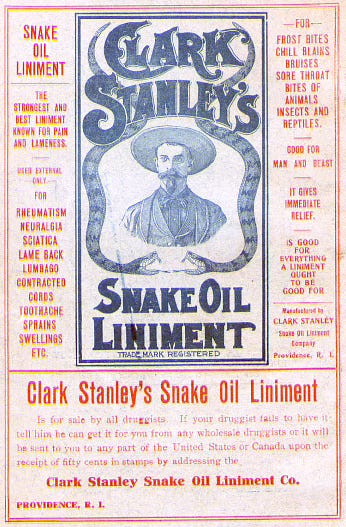
Doctors who deviate from the accepted standards for practice should be reported to their Medical Board. Pushing off-label ivermectin falls into the deviant doctor category. Revoking medical licenses should help to protect the public and shore up the integrity of the profession. Conventional medical doctors aren’t perfect, but at least they are generally held to a higher standard than other kinds of healthcare practitioners.
Despite what the conspiracy theorists claim, the medical profession doesn’t try to keep people sick and coming back for more treatments. If alternative practitioners were offering treatments with demonstrable value, mainstream medicine would be using them. Of course, there may be some unconventional treatments that have not yet undergone clinical trials and may later prove to be safe and effective, but until that time it’s a risky gamble.
The grim reality is that most mainstream doctors in America are tasked with seeing too many patients. They would surely be delighted if more of their patients were healthier and lightened up their workload. I hope that you will actively collaborate with your primary care provider, and take better care of yourself. That would be a win-win for doctor and patient.
Be well,
Dr. Mick
Claim Your Subscriber Benefits
If you are a free subscriber, you can receive one month of free access to all my paywalled articles when you refer three new subscribers. Simply use the share publication link below to encourage your friends, family, and social media followers to subscribe.
If you are a paid subscriber, you will receive all bonus newsletters including back issues, have unlimited access to all paywalled articles, and get a free download of my Healthy Fiber Calculator mobile app. This app can be used offline while shopping for plant-based processed foods, in order to find those with the most nutritional benefits. You will also be upgraded to a free lifetime paid subscription with payment in full for a one-year subscription.
If you don’t want a paid subscription, you can still help this publication grow by making a one-time donation. Anyone who donates $10 is eligible for a free download of my Healthy Fiber Calculator mobile app. A $20 donation gets you the app, plus three months of access to all paywalled articles. A $50 donation gets you all the benefits of a paid subscription.
This Post may be updated at any time. Please check back here again to find the most up-to-date information on this subject.
You can find more articles about Healthy Living in my Post Archive.
Help your friends and followers get healthier by suggesting that they subscribe to this Newsletter. You become eligible for premium features by making referrals:
If you find this Newsletter to be of value, and want to lend your support, please consider making a donation that will help it reach many more people: