
Power Napping
How much good does it do?

UPDATED: July 20, 2026
Welcome to the Healthy Living Is Good Medicine Newsletter, presenting timely, science-based, original articles covering a wide range of preventive medicine and public health topics, along with critical commentaries on the politics and economics of the American healthcare system.
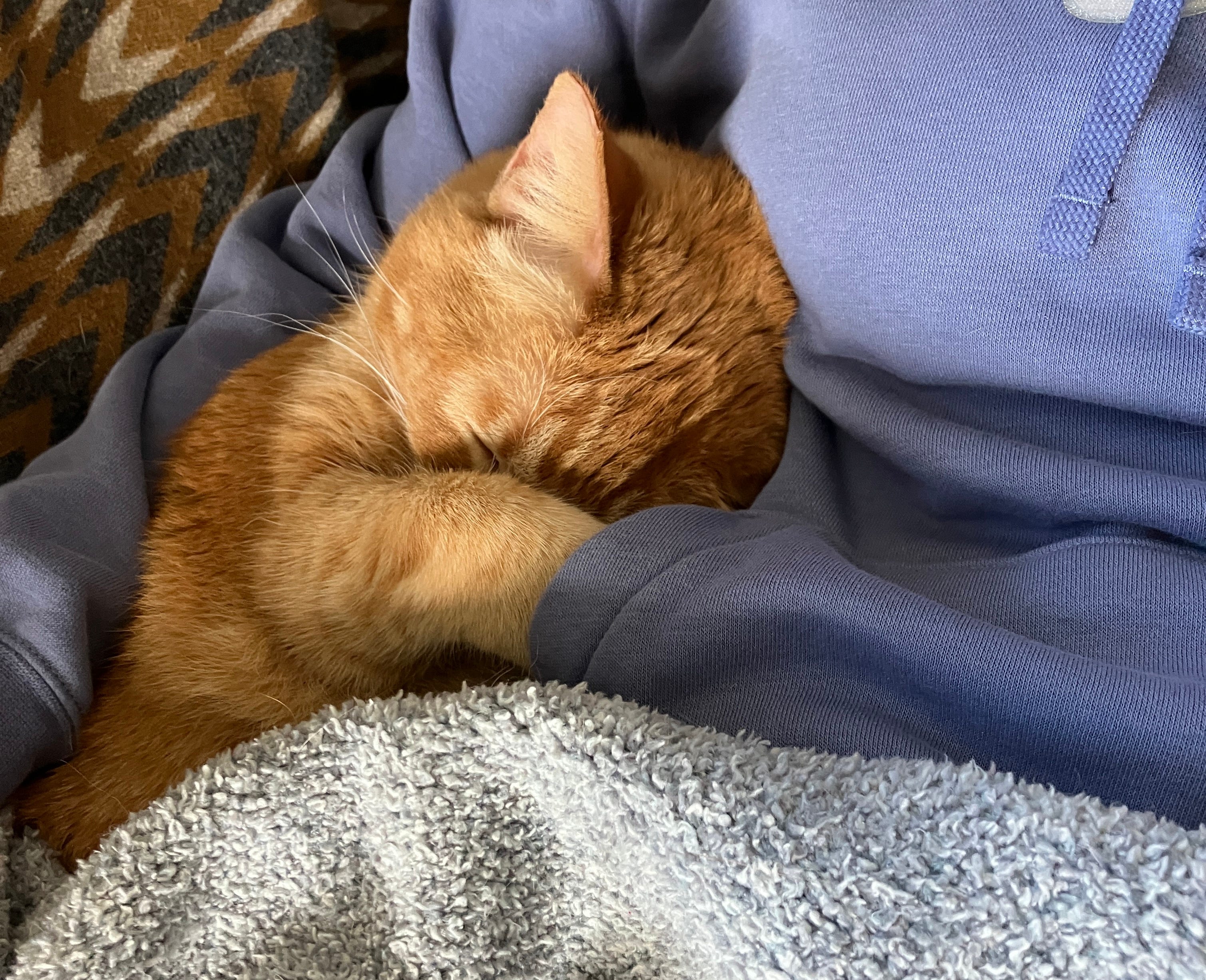
A power nap (aka “cat nap”) in the 10–20 minute range is generally considered the sweet spot for restorative benefits, without the grogginess that typically accompanies longer naps. That’s because sleep moves through fairly predictable stages, from light sleep (stages N1 and N2), then deep slow-wave sleep (N3), then REM sleep, characterized by rapid eye-movements, in cycles.
Staying in stages N1 and N2 gives people measurable boosts in alertness, mood, and motor performance, and they can be easily awakened from these light stages. Power naps can be effective even when schedules allow a full night’s sleep, and can take the place of coffee as an afternoon pick-me-up.
Problems begin around the 30-minute mark, when many people drop into deep, slow-wave sleep. If they’re awakened during this stage, they can experience “sleep inertia,” a fuzzy-headed, disoriented, hung-over effect that makes them feel worse than they did before they napped. It can take a half-hour or more for that groggy feeling to wear off completely.
Sleep lab studies have shown that as little as 10 minutes of light sleep can produce an immediate improvement in alertness. The most commonly cited power nap is 20 minutes long, although some people may briefly experience sleep inertia afterward. A good power nap is long enough to get some light-sleep benefit, and short enough to avoid the downside of deeper sleep. The risk of grogginess increases after 20 minutes if people enter slow-wave sleep.
If you’re acutely short on sleep a 90-minute nap is a good option because it lasts roughly one full sleep cycle, so you’ll awaken near the light-sleep end, rather than mid-cycle. This provides more of a restorative benefit, including some REM sleep, at the expense of a bigger time commitment.
Naps, especially short ones, are dominated by lighter, non-REM sleep stages. Night-time sleep patterns cycle through slow-wave sleep and REM in a predictable way that’s tied to our circadian rhythms. Several processes, such as lowering blood pressure, consolidation of declarative memories, growth hormone regulation, and activating the brain’s debris-clearing glymphatic system, all appear to depend upon that overnight structure.
Naps are a reasonable stop-gap measure for an acute sleep debt, particularly when it comes to alertness and safety-critical performance, but they can’t take the place of consolidated night-time sleep for achieving the full range of restorative functions. Circadian misalignment due to shift work or an irregular sleep schedule can’t be fixed by napping, and it won’t repair a circadian disruption’s adverse metabolic and cardiovascular effects.
In many countries, where people work in order to live rather than live for work (as with the Puritan work ethic), a mid-day nap is part of the culture. Businesses typically close between noon and 4:00 PM to allow time for a nosh, a nooner, and a nap. The nap timing aligns well with the circadian dip in alertness, so it is less likely to interfere with night-time sleep’s onset.
Note that Mediterranean countries with strong siesta traditions don’t show a clean and isolated cardiovascular advantage over non-napping cultures, once the studies are adjusted for diet. Given the reverse-causation problem, this is yet another case where observational data can’t provide good answers to questions about the impact of napping relative to baseline health status.
Some newer studies link habitual daytime napping with a higher risk of metabolic syndrome, type 2 diabetes, and cardiovascular disease. Once again, this research is confounded by nappers who have obstructive sleep apnea, depression, or circadian rhythms disrupted by shift-work, and must nap because they sleep so poorly at night.
Notable Nappers
British Prime Minister Winston Churchill insisted upon a highly unorthodox sleep schedule, relying upon a daily afternoon nap to sustain his immense workload during World War II. He famously said that his routine allowed him to squeeze “a day and a half’s work” out of every 24 hours.
Every day around 5:00 PM, Churchill would pause his duties, undress fully, put on pajamas and a sleeping mask, and climb into bed. His naps typically lasted between one and two hours. During the height of the German blitz attacks on London he would retreat to his private room in the underground war room for his mandatory nap.
Churchill typically stayed awake until at least 3:00 AM. This was when he performed his most intensive work, dictating speeches, letters, and books to a rotating shift of secretaries. He would awaken by 8:00 AM, after only four to five hours of continuous sleep at night. He would then remain in bed for the first three to four hours of his day, where he ate a heavy breakfast, smoked cigars, read a number of newspapers, and dictated early correspondence. He rarely left his bed before 11:00 AM.
Churchill wrote in his memoirs, “Nature has not intended mankind to work from eight in the morning until midnight without that refreshment of blessed oblivion which, even if it only lasts twenty minutes, is sufficient to renew all the vital forces.” He died of a stroke at the age of 90.
Other notable nappers include: U.S. Presidents Ronald Reagan, John F. Kennedy, and Lyndon B. Johnson; Inventor Thomas Edison; Artist Salvador Dalí; and Generals Stonewall Jackson and Napoleon Bonaparte.
Thomas Edison developed a napping habit that involved holding a heavy steel ball in each hand. Sitting upright in an armchair, as soon as he entered the first stage of sleep his muscles would relax, and he would drop the balls onto steel saucers. The sound would instantly wake him up, and he would grab a notebook to write down his thoughts and mental images. He used his power napping technique to stimulate creative insights and breakthrough ideas.
Edison was intentionally targeting the N1 sleep stage, the transitional “twilight zone” between wakefulness and deep sleep known as hypnagogia. During this brief phase, the logical parts of the brain quiet down, allowing vivid, unconventional, and highly creative thoughts to surface. If he slept any longer, he would enter deep sleep and completely forget those insights. Salvador Dalí also utilized this same method to find inspiration for his surrealistic paintings. A 2021 study validated this effect on creativity.
A Napping Strategy
I make myself comfortable in a cool, dark bedroom, and set my smart phone alarm for 30 minutes, figuring it will take me about 10 minutes to fall asleep. To facilitate my entry into stage N1, instead of counting sheep I count my breaths, with a complete inhalation/exhalation cycle per count.
I visualize the minute-hand of an analog clock moving from 1 to 12, letting it advance to the next number with each breath cycle, then starting over again at 1:00 o’clock. If my attention wanders and I lose count, I begin again at 1.
Staying focused on the breath has value in itself as a mindfulness exercise. Counting from 1 to 12 over and over again keeps my mind from ruminating, and it doesn’t take long before sleep soon comes as a relief from the boredom. Being either mindful, or asleep, is a win for me, either way.
Healthy Sleeping
Not everyone needs a total of 7-8 hours of sleep each 24-hour period, although it is considered the sweet spot for most people. Some people can function well on less, while others can accommodate more. Duration is not a one-size-fits-all prescription, but health risks do appear to increase with both too much and too little sleep.
It is well known that restorative sleep enhances both behavioral and cognitive performance. An experimental study found that NREM (non-REM) sleep, such as occurs during brief naps, can contribute to this beneficial effect via synchronizing circuits in the brain’s cerebral cortex. So, nodding off is actually a good thing, except of course while driving, or when your spouse is talking to you. During this shallow phase of sleep the brain is “recharging” itself and encoding new information.
Alarmingly, nearly half of older adults (>60) suffer from a sleep disturbance. This may be bidirectionally related to Alzheimer’s disease, according to a recent study. Older adults tend to spend less time in the deep REM sleep associated with dreaming. This deficit correlates with impaired motor skill learning.
They also get less stage 3, slow-wave, non-REM sleep, which is required for memory consolidation. This third stage in our 90-minute sleep cycle lasts 20–40 minutes and is the most restful. A recent study found that people over age 60 are 27 percent more likely to develop dementia if they lose just one percent of their slow-wave sleep over the course of a year.
Older people are also more susceptible to breathing disturbances such as obstructive sleep apnea, which can result in decreased brain oxygenation. That can further interfere with sleep quality and facilitate amyloid deposition associated with Alzheimer’s disease. Anything that reduces blood flow to the brain, such as narrowing of the arteries, is a risk factor for dementia.
Better sleep habits can improve sleep quality. Sleep medicine and orthopedic guidance generally agree on the recommendation for side-sleeping as the best general-purpose position. This is particularly true for anyone who snores or has mild-to-moderate obstructive sleep apnea (OSA). Positional therapy is an evidence-based treatment for OSA that is significantly worse in the supine position. People who experience nocturnal gastro-esophageal reflux may find the left lateral recumbent positon most helpful.
Adequate pillow and mattress support can matter more than the sleeping position alone. A side-sleeper with no pillow between their knees, or a back-sleeper with a pillow behind their knees that’s too thick, can still experience the adverse effects of poor spinal alignment. The general principle is to keep the spine as close to its natural neutral curve as possible, regardless of position.
Left-side sleeping is the standard recommendation from the second trimester of pregnancy onward. While there is no one universally best position, most guidance suggests side-sleeping as the starting point for most adults. A stomach or back sleeper who has no pain, no apnea, and no reflux issues has no reason to change if it is consistent with uninterrupted, restorative sleep.
For a good night’s sleep it is also important to avoid late suppers and forego bedtime snacks. It is also best to maintain a regular sleeping and waking schedule that coincides more closely with natural daylight.

Taking prescription medications and over-the-counter sleep aids, such as melatonin and antihistamines, are not recommended, especially for seniors. A small, placebo-controlled, double-blind, randomized, crossover clinical trial showed that caffeine consumption can adversely affect sleep for up to 12 hours, in a dose-dependent relationship.
A Mendelian randomization study found a strong connection between daytime napping and increased brain volume and improved cognitive function. Another study found that irregular sleep duration increased the risk of type 2 diabetes by 34 percent. Researchers concluded that patients can reduce their risk of diabetes by getting a total of 7-9 hours of sleep nightly, throughout one’s life. People who work night shifts, or even worse, rotating shifts, have increased health risks.
For optimum health, one’s goal should be to sleep soundly, dream sweetly, and wake up sassy. Your bedroom should be cool, very dark, and quiet for the best sleep. Light exposure late in the evening can interfere with the body’s internal clock and natural sleep-wake cycle. For most people, the temperature range for restorative sleep is 60-67°F. However, the ideal ambient temperature may be different for older folks who have a problem regulating their body temperature.
Good sleep hygiene includes not watching action shows or news programs before bedtime. A nature documentary can be both educational and sedating. However, spending the last hour of wakefulness reading, or listening to soothing music, is preferable to anything that you might watch on a screen of any size. “No screen time near bedtime” is always good advice. You don’t want to let anything that provokes fear or anger prevent sweet dreams.
Drinking a lot of water, and the diuretic effects of alcoholic and caffeinated beverages, will likely result in having to wake up during the night to use the bathroom. Research shows that having only one evening drink containing alcohol is associated with reduced-quality sleep. Alcohol may help some people fall asleep faster, but it can disrupt sleep patterns and have a rebound effect, causing some people to wake up early and have trouble falling back to sleep.
In addition to being a diuretic, caffeine also acts as a stimulant that interferes with sleep. If you’re having trouble staying awake, that’s your body telling you to get more sleep, not to take stimulants. Yet, way more than half of American adults drink coffee to help them make it through the day.
Caffeine’s stimulant effect comes from blocking adenosine receptors in the brain. Flogging a fatigued nervous system with caffeine (or other stimulants) can interfere with the brain’s ability to recover during sleep. It is not all that rare for heavy coffee drinkers to begin hallucinating.
According to a recent imaging study, daily caffeine consumption reduces cerebral cortex volume and affects brain regions involved in long-term memory formation. If you’re a die-hard coffee addict, you will probably have forgotten what you’ve just read when you awaken tomorrow. Another studyfound that drinking more than four cups of coffee per day increases the risk of stroke by 37 percent.
On the caffeine flip side, a recent prospective study showed that regular consumption of black, caffeinated coffee or tea resulted in a significant reduction in the risk of cardio-metabolic multi-morbidity, defined as the coexistence of at least two of the following conditions: type 2 diabetes, coronary heart disease, and stroke. Compared with non-consumers and consumers of less than 100 mg of caffeine per day, a caffeine consumption of 200-300 mg/day (about three daily cups of black coffee) carried the lowest multi-disease risk.
As you can see, there are myriad causes and contributors to poor sleep, so there are no all-over panaceas. However, medical sleep specialists with sleep labs can pinpoint specific problem areas and address them. If the strategies for a good night’s sleep presented here haven’t helped, ask your primary care provider for a referral to a sleep specialist.
Exploring the Dreamtime
Because there was no twilight during my extended camping trip to the coast of equatorial East Africa, I went to sleep shortly after sundown, and awakened just after sunrise, about 11 hours later. During the day, the sun was intense and even the shade was unbearably hot. Following the example of animals that estivate, I sought refuge in a sea cave where I would nap daily for several hours.
By spending more time asleep than awake, my dreams developed an amazing continuity, and my waking experiences assumed a magical, dreamlike quality. It felt like my “real life” was taking place in the dreamtime, and the waking state, although navigable, was illusory. I lived in this altered state of consciousness for several months, and discovered that it greatly enhanced my insights and intuition.
To be clear, I’m not recommending getting this much sleep for anyone. For me, it was an interesting “natural experiment” and I suffered no ill effects. Research has found that spending too much time lying down is associated with systemic inflammation, elevated blood pressure, and increases the risk of heart disease and stroke, but a causal connection has not been established.
Napping Neurochemistry
This is the part that can really put you to sleep, so feel free to skip it. With an undergraduate degree in biochemistry, this information is right up my alley, but I doubt that it will fascinate you. If it does, please let me know.
Every minute we’re awake, our brain’s neurons are using ATP for energy. One of ATP’s breakdown by-products is adenosine. It accumulates steadily in the brain, especially in the basal forebrain, the arousal center. Adenosine binds to A1 receptors and inhibits the wake-promoting neurons. That’s a big part of the reason why people become progressively more sleepy the longer they’ve been awake. Caffeine can temporarily delay sleepiness by blocking adenosine receptors.
Once we fall asleep, adenosine starts clearing, coinciding with a rise in slow-wave activity in the brain. Slow-waves are the high-amplitude, low-frequency (0.5–4.0 Hz) delta-oscillations that define the N3 stage of deep sleep. This reduces sleep pressure, while the brain reduces the strength of synaptic connections that were built up during waking-state learning and activity. The deeper we go into a sleep cycle, the more the slow-wave activity clears adenosine. This process typically peaks within the first 20 to 40 minutes of sleep onset.
If we’re awakened in the middle of strong slow-wave activity, it interrupts the adenosine clearance and synaptic down-scaling. Residual adenosine may still be exerting an inhibitory effect on arousal circuitry, even after we’re behaviorally awake.
Conclusion
Neuroimaging studies have shown that right after waking from deep sleep, blood flow and metabolic activity in the prefrontal cortex remain at a low level for a period of time, even though other brain regions have come back on line. The prefrontal region governs exactly the functions that sleep inertia hits the hardest; decision-making, working memory, and reaction time.
There’s a body of evidence showing that some cerebral cortical regions can continue producing sleep-like slow waves even after a person is behaviorally awake and moving around. They’re technically awake, but parts of their cortex are still showing sleep-mode activity patterns. Somnambulism is an interesting sleep-related state of dissociation related to this phenomenon.
Sleep inertia gets worse with greater sleep deprivation. Lack of sleep results in a faster, deeper descent into slow-wave activity. Sleep inertia is also worse during the circadian dips that occur around mid-afternoon and in the middle of the night. Those are the times when our body is biologically primed to consolidate sleep, rather than release us from it.
The aim of power napping should be to wake up before slow-wave activity has ramped up significantly. If we’re still in the N1/N2 phase, there’s no unfinished adenosine clearance needed, or prefrontal cortex deactivation to fight through. Waking up from a short power nap, we’ll be good to go.
Here’s to your good night’s sleep, and if needed, a refreshing power nap,
Dr. Mick
This article may be updated at any time. Please check back here again to find the latest information on this subject. Visit the Archive for the most recent versions of all my articles.
If you find this Newsletter to be of value and want to help it continue, making a small donation will keep Substack happy. Subscribers who donate will also gain access to my paywalled articles.