
Less Time Online
Health Benefits of a Media Diet

UPDATED: February 19, 2026
Welcome to the Healthy Living Is Good Medicine Newsletter, presenting timely, science-based, original articles covering a wide range of preventive medicine and public health topics, along with critical commentaries on the politics and economics of the American healthcare system.
This past weekend, with the Super Bowl and Winter Olympics competing for my viewing time, I paid much less attention to world and local news, and spent less time reading and writing Substack Notes. The result was a feeling that I can only describe as a “lightness of being.” I felt less burdened by concerns about things that are far beyond my control.
Call it “blissful ignorance” if you will. With less of my limited resources of time and attention being inundated by a continual online avalanche of headline-grabbing news, social media’s deliberately inflammatory content, and the bottomless pit of useless and erroneous information, I was able to focus on more important things, such as chatting with my son, doing creative cooking, making music, and investigating healthy living topics.

Without as many online distractions, I was able to focus my energy and spend my time on the very small sphere of influence that I have among my friends and family members. As a result, I've been feeling much more optimistic and generally happier. Studies have shown that positive emotions can lead to better overall health and a greater sense of wellbeing for us personally, as well as for those around us.
Too Much Time Online
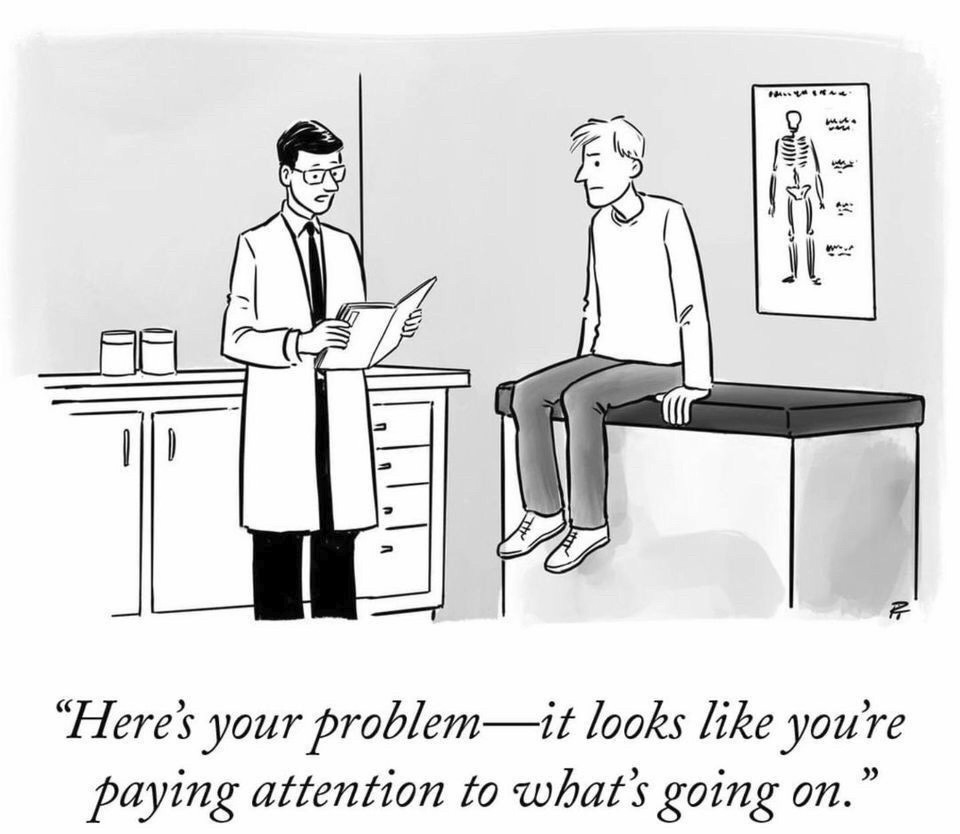
According to a recent study people average more than six hours a day online. Much of that time involves searching for information. The type of information that people seek online has an impact upon their mental state, which in turn influences the kind of information that they look for in the future, creating a self-reinforcing feedback loop. As one might expect, browsing content that is gloomy or scary is associated with poorer mental health and more negative emotions.
When subjects in the study were made aware of the potential emotional impact of the webpages they had been viewing, they tended to browse for more positive content, which improved their mood. These results suggest that “warning labels” on content could be effective in reducing needless exposure to pages or posts with a negative influence. To break out of a downward spiral, users could go on a “media diet” and consume only material that is actionable, educational, or emotionally beneficial.

Adding to the online risks are an increasing number of AI chatbots providing companionship for millions of people, who daily spend hours bonding with the digital personalities. Some of those artificially manipulated relationships have resulted in suicides. On the plus side, a conspiracy theory debunking chatbot has helped some people become more open to skeptical inquiry and willing to question their unfounded beliefs.
What Information Can We Trust?
When it comes to the media, let the consumer beware. NewsGuard, an outstanding non-partisan disinformation watchdog, has become a prime target for attacks by the MAGA-GOP as part of an ongoing political assault on the truth. In response, NewsGuard exercised its First Amendment rights by suing the U.S. Government.

Here’s how NewsGuard rated some media news sources more than a year ago:
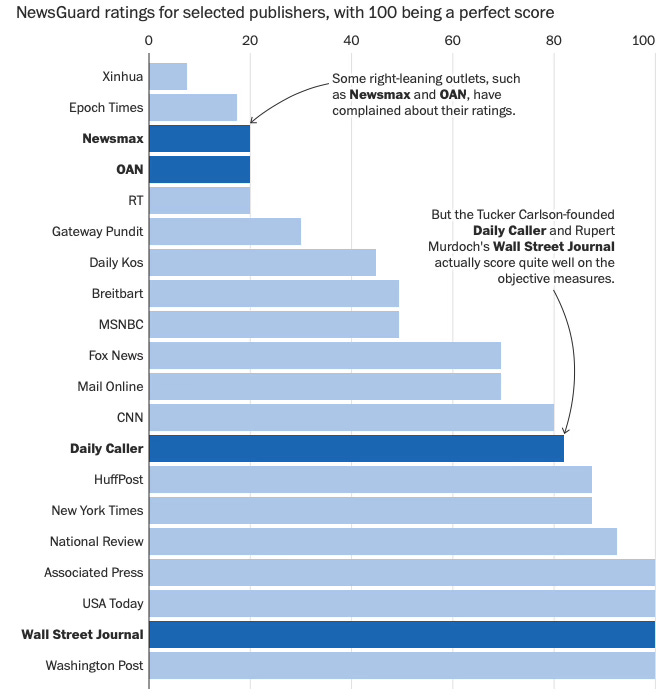
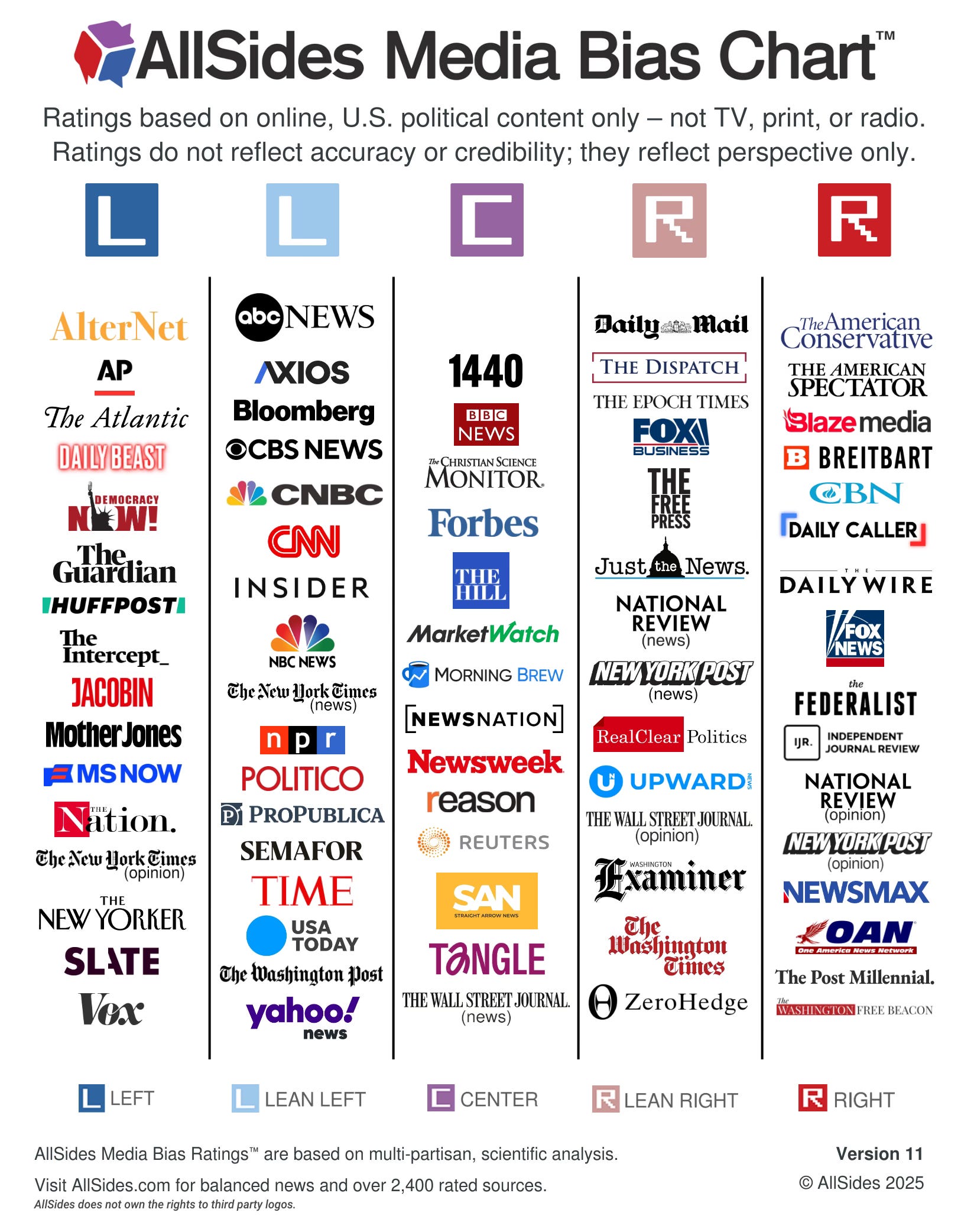
Since then, the New York Times has gained in trustworthiness, while for the Washington Post trust in its reporting has declined. As for online media’s political biases, AllSides summarizes the major sources:
Another rating organization, the Media Bias / Fact Check website maintains a much more extensive searchable list of the least biased new sources, as well as other kinds of bias categories and bias ratings of politicians and journalists.
When is comes to trusting so-called authorities with an online presence, just because someone has an advanced degree in a medical or scientific field doesn't automatically mean that everything they say or write is completely accurate. Even with the best of intentions, the fact is that we are all human and subject to personal biases, making us capable of significant errors. Wanting something to be true or false leads to errors due to confirmation bias. That influences our search for information and skews our interpretation of that information.
Just as content generated by artificial intelligence comes with a disclaimer, so should information produced by humans using their “natural intelligence.” Please maintain a healthy skepticism, especially when something you come across seems too good, or too bad, to be true. Make your trust conditional, and make an effort to independently verify information’s accuracy.
Unfortunately, there are many doctors, nurses, scientists, nutritionists, dietitians, psychologists, and other professionals in the health field who have hidden agendas, or are just plain quacks intent upon making money from their scams. Be wary of those who have something to sell, or who claim to have greater expertise than other similar professionals, or censor anyone who questions, challenges, or disagrees with them.
Find out what monied interests they represent, lobby for, receive speaking or consulting fees from, or if they have any other financial conflicts of interest. When scientists defend corporations or industries with cherry-picked studies, be suspicious of their motives. If they are not transparent about who they work for, and are unwilling to provide a full disclosure in their bio or upon request, be especially wary. I'd also want to steer clear of any self-proclaimed expert who makes their living as a social media influencer and has a presence on every major platform.
As for the quality of research being done in today's “publish or perish” academic environments, I'm sorry to say that there are a lot of flawed studies polluting the scientific literature. Junk science gets disseminated in junk journals that lack peer review and publish anyone who is willing to pay. I make an effort to avoid such trash, but sometimes it gets past my crap-detector. That's another reason that I like to review and update what I publish here. If I have made a mistake, I’ll correct it, rather than try to defend it.
Doom-Scrolling and Online Stressors
Perhaps the greatest lifestyle challenge of our modern times is a psycho-physiological state that increases our susceptibility to a wide variety of illnesses and exacerbates existing ones. We refer to it as stress, and dealing with stress effectively should be a priority, since stress management is one of the pillars of good health. For that, I recommend cultivating mindfulness and focusing our awareness on what is actually here and now, rather than gettig lost in “head-trips.”
Prolonged stress has harmful effects on both body and mind. Living in a stressed-out state is like driving with one foot pressing the gas pedal, and the other foot on the brakes. That makes it harder for us to get anyplace, and accelerates wear and tear for both the vehicle and its driver. Avoiding exposure to known stressors is another effective strategy.
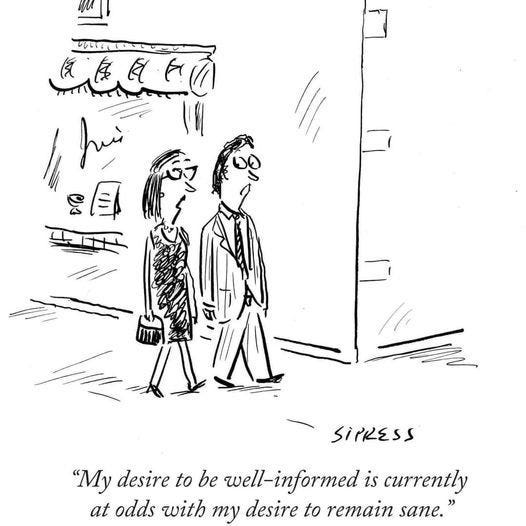
Unfortunately, America's powerful corporations deliberately stress people in order to extract more money from them. Much of what we are exposed to in the world of media is solely designed to captivate our attention by using subconscious, emotionally-laden, psychological hooks. We are then manipulated into watching or reading content that is accompanied by an avalanche of advertising.
Mass Media Hazards
In mass media, the audience is passive and receives information from media outlets, such as newspapers, magazines, radio, and television. In contrast, social media’s participants create, receive, and respond to information. The distinctions get blurred when mass media also has an online presence.
Much like junk foods, most of the the information we are fed by mass media does not nourish our psyche. A constant flow of bad news generates feelings of doom and gloom, but that’s what sells. Brief respites come during the commercials. Mass media takes us on an emotional roller-coaster ride by design, and we are left feeling vulnerable and stressed. It appears that’s what makes us more likely to become indiscriminate consumers.
Notice how drug company ads distract us with uplifting images, while lilting voices narrate the scary adverse effects. Food commercials offer comfort through over-eating. Ads pushing alcohol show people having a fabulous time socializing. The message is clear: If you don’t want to feel lonely or isolated, drinking can help. Stressed by the headlines, we become suckers for the ads’ sales pitches.
Fake News Pollution
Except for those rare outlets that still insist upon journalistic and editorial integrity, online, printed, and TV “news” should be considered “infotainment” at best, and propaganda at worst. They certainly cannot be counted upon to be reliable sources of accurate information. Fake news is cheap and easy to produce. In stark contrast, investigative reporting and fact-checking are time-consuming and expensive.
News and information sites produced by artificial intelligence tools are operating with little to no human oversight, and are churning out false narratives, according to NewsGuard tracking. Currently, there are over a thousand such online sites, and the number keeps growing.
In the early days of television, a broadcast network's news program was a money-losing public service. Today, the evening news has become a major profit center. Half-hour doses of “current events” consist of slick soundbites and fleeting images, packaged between numerous commercials. What passes for news has been carefully selected to keep people's eyes glued to the screen, much to the benefit of the program's sponsors.
Cable news networks such as FOX and MSNBC cater to viewer preferences for content that’s tailored to their disparate information bubbles. It is difficult to find media organizations reliably presenting information that is relatively unbiased and largely trustworthy. There are some media bias rating systems, including the Ad Fontes Media chart and the AllSides bias checker. The Critical Thinking Organization has a publication that helps people detect media bias and propaganda.
Social Media Toxicity
In 2024, U.S. Surgeon General Dr. Vivek Murthy issued a public health advisory and asked Congress to require warning on social media platforms because of their harmful effects, especially on young people’s mental health. More than a third of adolescents say they use social media almost constantly.
“Why is it that we have failed to respond to the harms of social media when they are no less urgent or widespread than those posed by unsafe cars, planes or food? These harms are not a failure of willpower and parenting; they are the consequence of unleashing powerful technology without adequate safety measures, transparency or accountability,” wrote Murthy.
Social media company business models include providing content that is deliberately addicting. Children also need to be protected from online harassment, abuse and exploitation, and exposure to extreme violence and sexual content. According to a new study, how people use social media impacts their mental health more than how much time they spend on it. Using it wisely and forging meaningful connections can actually reduce the stress of social isolation.
Federal regulations require social media companies to prevent children younger than age 13 to have accounts without parental permission, but the restrictions are easily bypassed. The U.K. and E.U. have already passed laws to protect children when they interact with digital platforms.
It's not only children who are being harmed by social media. A constant stream of new posts can create a sense of urgency and a fear of missing out, resulting in doom-scrolling and compulsive checking. Excessive social media use can lead to neglect and deterioration of real-world relationships, resulting in social isolation and loneliness.
Exposure to curated, often idealized versions of other people's lives can lead to feelings of inadequacy and low self-esteem. Sharing personal information online can increase the risk of identity theft and fraud. Users can become targets for online harassment, including trolling and hate speech.
The Information Quagmire
Social media platforms provide fertile ground for the creation and dissemination of false and misleading information, resulting in an information quagmire that contributes to political polarization and social divisions. The platforms run on algorithms that quickly learn how to selectively push content to people’s echo chambers and amplify their fear and anger. That’s because those emotions work most effectively in creating clickbait.
Social media's content is littered with unqualified personal opinions, and further polluted by massive amounts of intentional misinformation. Much of the content is generated by AI-powered bots and troll farms that produce deep fakes, stoke controversies, and encourage outrage and conflicts.
To mitigate social media's risks, it is crucial that it be approached carefully, with the establishment of clear boundaries for its use. Critical thinking skills are necessary to detect the baloney. To avoid addiction, take frequent breaks, limit screen time, and be highly selective about the content viewed.
Here’s how to avoid getting stuck in the social media muck:
1) Don't trust information coming from people who don't reveal their true identity, or claim to anonymously represent a group or organization.
2) Ask for people's qualifications and credentials when they present themselves as experts.
3) Watch out for people who make a living as social media influencers, and look for their hidden agendas.
4) Follow the money, since many online influencers attract corporate backers, which in turn influence them to promote their produces or services.
5) Be wary of anyone who is using social media to monetize their own products or services.
6) Be alert for AI bots and troll farms that generate click-bait controversies and hook people's fear and anger.
7) Don't trust people on social media who act as arbiters of "the truth" and try to shut down anyone who doesn't agree with them.
8) Discount any “science-based” claims that fail to cite current credible research, published in respected, peer-reviewed journals.
9) Remain skeptical of sources cited, and verify that they are current and reputable.
Feel free to add your own suggestions to this list. We need to work together to protect ourselves and each other from the potential harms caused by a mass media overload. For a deeper dive into default skepticism and critical thinking, see my Post on the subject:

All things considered, do we really need to be up-to-date on current events and breaking news, when there is no way for us to do anything about what’s happening? Why not go on a “media fast” and see how it affects our mental health and physical wellbeing? Being willfully ignorant of things beyond our control could prove beneficial in many ways. The only exception is my local weather report. Of course I can’t control the weather, but I’d really like to know if I should carry an umbrella.
In Summary
Research suggests several meaningful health benefits from reducing social media time and news consumption:
Mental health improvements are often the most noticeable. People frequently report decreased anxiety and depression symptoms, partly because they’re less exposed to the constant social comparison that platforms encourage. There’s also typically less FOMO (fear of missing out) and fewer feelings of inadequacy from seeing curated highlights of others’ lives.
Sleep quality often improves significantly. The blue light from screens suppresses melatonin production, and the stimulating or distressing content keeps your mind active when it should be winding down. Reducing evening screen time especially helps with falling asleep and sleep depth.
Attention and focus tend to recover. Social media is designed to fragment attention with endless scrolling and notifications. People who step back often find they can concentrate better on tasks, read books more easily, and generally engage in deeper thinking rather than staying in a reactive, skimming mode.
Stress levels frequently decrease, particularly from reducing news consumption. The negativity bias in news coverage combined with 24/7 access to distressing global events can create chronic low-level stress. Some awareness of current events matters, but constant exposure often provides diminishing returns while increasing cortisol.
Real-world relationships often strengthen when people invest the time previously spent scrolling into face-to-face interactions, which provide richer emotional connection and better social support.
Don’t miss the irony of scrolling down to read this online. I think the bottom line here is to be very selective with your online time and attention. Find sustainable ways to be informed and connected, without allowing these platforms dominate your life, even if it’s what their algorithms are programmed to do.
This Post may be updated at any time. Check back here again to find the most up-to-date information on this subject.
Share this publication with others via your social media accounts, and encourage your friends, family, and followers to become healthier by subscribing:
If you find this Newsletter of value, and want to lend your support, please make a small donation to help it reach many more people: